
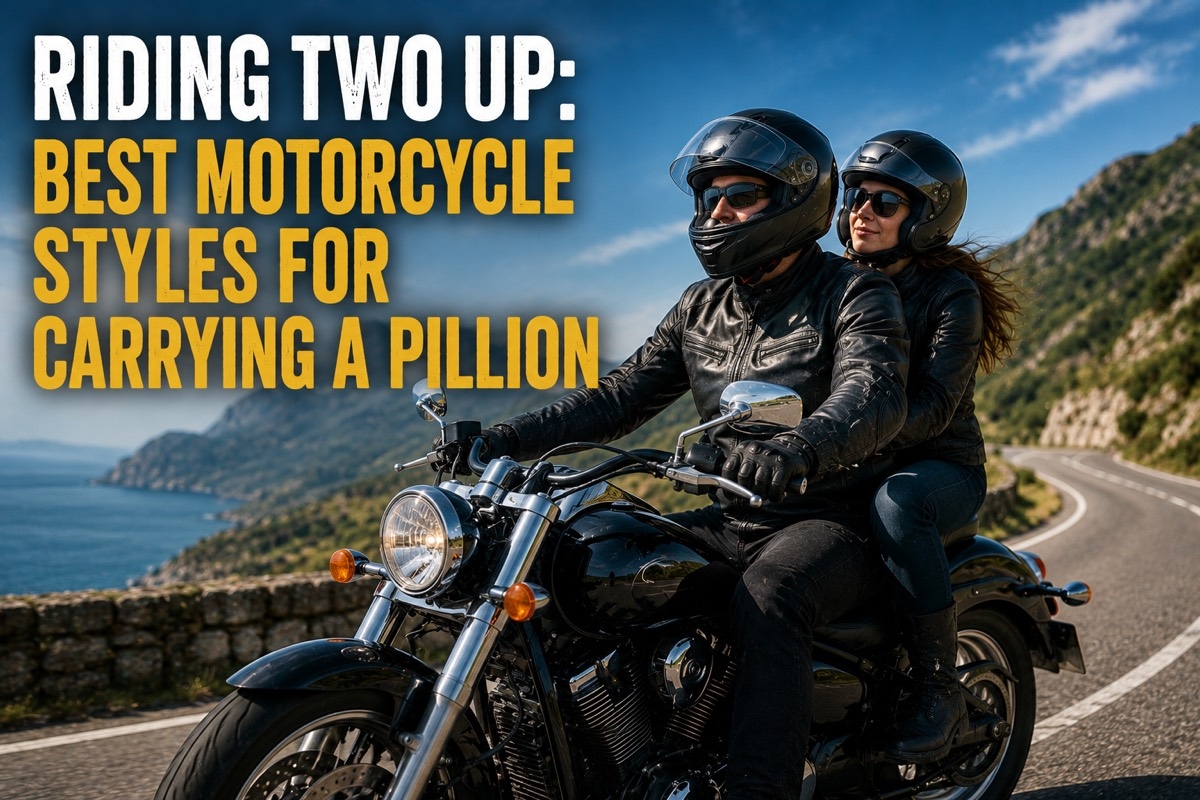
Riding Two Up: Best Motorcycle Styles for Carrying a Pillion
Carrying a pillion changes the riding experience in ways that go well beyond adding weight. The bike's handling shifts, the pillion's comfort becomes part of the ride, and the choice of motorcycle matters more than it does when you're riding solo. Not all styles are created equal when it comes to two-up riding — some are genuinely well-suited to it, others are an afterthought, and a few are best avoided altogether.
Here's how the main motorcycle styles compare for carrying a pillion, and what to think about when choosing the right bike for two.
Touring Bikes: The Gold Standard
If pillion comfort is a genuine priority, a full touring bike is hard to beat. Machines like the Honda Gold Wing, BMW K 1600, and Kawasaki Voyager are engineered with two-up riding as a core use case, not an afterthought. The pillion seat is typically wide and well-padded, the footpegs are positioned for a passenger rather than optimised entirely for the rider, and the suspension is tuned to handle the added weight without becoming skittish.
The tradeoff is size and weight. Full tourers are large, heavy motorcycles that can feel unwieldy in slow traffic or tight car parks. For regular long-distance two-up touring, that's a reasonable compromise. For urban commuting or twisty back roads, a different style may serve you better.
Cruisers: Comfortable but Variable
Cruisers — Harley-Davidson, Indian, and their equivalents — have a reputation for pillion comfort, and in many cases it's deserved. The relaxed riding position means the pillion sits upright naturally, and many larger cruisers have substantial rear seats with optional backrests. The low seat height also makes mounting and dismounting easier, which pillions who are new to motorcycles often appreciate.
The variability comes in the details. Some cruisers have genuinely excellent pillion accommodation; others have narrow rear seats that look the part but are uncomfortable over any meaningful distance. The riding position can also put the pillion's feet quite low, which some find fine and others find awkward. As always, the specific model matters more than the category.
Adventure Tourers: Versatile and Increasingly Good
The adventure tourer category — BMW GS, Triumph Tiger, Honda Africa Twin and their peers — has become one of the better choices for two-up riding over the past decade. Modern examples typically offer adjustable suspension that can be set for the extra load, solid pillion seating, and the upright ergonomics that keep both rider and pillion comfortable over long distances.
Taller seat heights can be an issue for shorter pillions mounting and dismounting, and the off-road-oriented suspension of some models can feel unsettled on bumpy roads when loaded. But for mixed UK riding — motorways, A-roads, and the occasional byway — a good adventure tourer handles two-up duties very capably.
Sports Tourers: The Practical Middle Ground
Sports tourers like the Kawasaki Ninja 1000SX, Yamaha Tracer, and BMW S 1000 XR split the difference between performance and practicality in a way that works well for two-up riding. They're typically faster and more engaging than pure tourers, but designed with enough real-world usability that pillion accommodation is taken seriously.
The pillion position on a sports tourer is usually more elevated than on a cruiser or tourer, which some pillions prefer — better views, and less sensation of being enclosed by the rider. Wind protection varies; some models have optional screens that help the pillion considerably on longer motorway stretches.
Naked Bikes: Capable but Limited
Naked bikes — unfaired roadsters in the middleweight and larger classes — can carry a pillion reasonably well, particularly for shorter rides. The pillion seat is typically accessible, the riding position is upright, and the overall package isn't as extreme as a sports bike. The limitation is usually wind exposure: without any fairing, both rider and pillion take the full force of the wind at higher speeds, which becomes tiring quickly on longer journeys.
For local rides, commuting with a pillion, or shorter day trips, a naked bike is a practical choice. For a full day on the motorway, the wind fatigue factor becomes significant.
Sports Bikes: Avoid for Regular Two-Up Riding
Most sports bikes — the fully-faired, performance-focused machines from the litre-class downwards — are poorly suited to carrying a pillion regularly. The pillion seat is almost universally an afterthought: small, high, steeply angled, and with footpegs set to keep the pillion's legs tucked up rather than in a natural position. After an hour the discomfort is noticeable; after two hours it's hard to recommend to anyone.
For a short blast on a summer's day, a sports bike with a pillion is perfectly possible. As a regular arrangement, it's worth considering what experience you're actually giving your passenger.
What to Look for in Any Bike for Two
Whatever the style, the things that actually determine pillion comfort are consistent: the width and padding of the seat, the position of the footpegs relative to the pillion's natural leg length, the quality of the grab rail or passenger handles, and the suspension's ability to absorb bumps rather than transmit them. A backrest — factory-fitted or aftermarket — makes a significant difference on longer rides.
The best test is the simplest one: sit your pillion on the bike before committing to a long ride. What's comfortable for thirty seconds in a showroom may not be comfortable for three hours on the road — but it's a start.
You might also like
Pillion Safety 101: How to Brief a New Passenger Before the Ride
What to cover before a first-time pillion climbs on — so both of you enjoy the ride and arrive safely.
The Pillion's Perspective: What Passengers Really Think About Long Rides
What goes through a pillion's mind on a long ride — and what riders can do to make the experience better.