How to Welcome New Members Into a Community
Every established riding community was once a group of strangers. The friendships that feel natural and easy now were once awkward first conversations, tentative introductions, and the particular discomfort of not quite knowing where to stand at a meetup. It's easy to forget that once you're settled in — but for every new person walking into a gathering for the first time, that discomfort is very real.
How a community treats its newcomers says a great deal about its character. And practically speaking, communities that welcome people well grow. Those that don't quietly shrink, as newer members drift away and are never replaced.
The First Five Minutes Set the Tone
Most people make their minds up about a new environment within the first few minutes of arriving. If they're greeted directly and made to feel like their presence is a welcome addition, they relax. If they stand on the edge of a group for a while before anyone acknowledges them, they feel like an outsider — regardless of how friendly everyone is once the conversation starts.
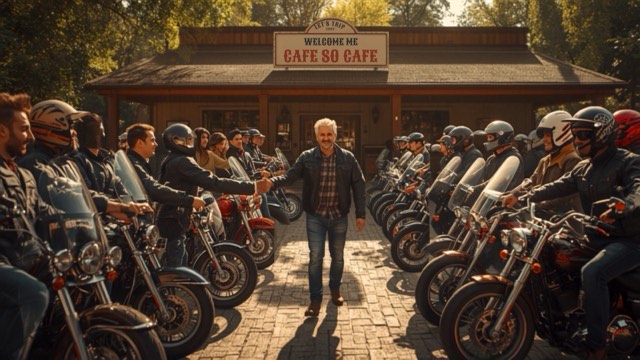
The simplest thing you can do is to be the person who notices new arrivals and says hello first. Not a group announcement, just a direct greeting. "Hi, I don't think we've met — I'm [name]." It takes ten seconds, costs nothing, and can be the difference between someone coming back and someone deciding this isn't really for them.
Ask Questions and Actually Listen
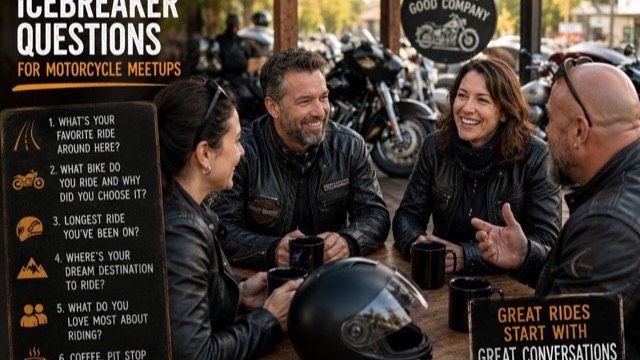
New members often arrive a little unsure of themselves. They don't know how much to talk, whether they're saying the right things, or whether their bike or experience level is going to be quietly judged. A genuine question — what do they ride, where they're from, how they found the group — gives them something easy to respond to and signals that you're interested in them as a person, not just going through the motions.
The listening part matters as much as the asking. New members can tell immediately when someone is asking questions out of politeness rather than genuine interest. If they say something worth following up on, follow it up. The communities that make people feel most welcome aren't the ones with the most organised welcome processes — they're the ones where people genuinely pay attention to each other.
Include Them in the Informal Layer
There's the official community — the events, the meetups, the group rides on the calendar. And then there's the informal layer: the WhatsApp threads, the "a few of us are going out Sunday" messages, the impromptu coffee run because someone had a free morning. The informal layer is where belonging actually happens.
A new member can attend formal events for months without feeling like they're properly part of things. What changes it is when someone adds them to the message thread, mentions them when a small group is forming, or invites them along to something that wasn't on the official calendar. That's the signal that says: you're one of us now, not just someone who comes to events.
Pair Them with Someone
On a group ride, it's worth thinking consciously about where new members are in the group and whether they have someone to ride with if the group gets split. A newer rider who loses the group at a junction and doesn't know the route is having a miserable time; a newer rider who's riding alongside someone who knows them and checks in at stops is having a good one.
You don't need to assign a formal buddy system. It's just about being aware enough to notice who's on their own and making a small effort to ride near them or check in during stops. Most people won't ask for help if they're struggling — they'll just quietly have a worse experience than everyone else.
Don't Make Them Feel Like Beginners Forever
There's a version of helpfulness that tips into condescension — the rider who treats every newer member as perpetually inexperienced, long after they've found their feet. Communities that keep people in the 'newcomer' box well past the point where it applies are missing the moment when someone transitions from guest to genuine member.
Pay attention to when someone has settled in. When they start contributing ideas, when they're the one introducing the next new person, when they're clearly comfortable — that's when you treat them as the established member they've become. Welcoming is something you do at the start; belonging is something that grows, and your job is to get out of the way and let it.
Set the Tone by Example
Culture in a community is set by behaviour, not by policy. If the established members are warm, inclusive, and consistently make an effort with new people, that becomes the norm — newer members absorb it and replicate it with the next wave of arrivals. If the default is to cluster with the people you already know and let newcomers fend for themselves, that becomes the norm too.
You don't have to organise anything. You just have to say hello first, ask a question, and make someone feel like they were expected.