
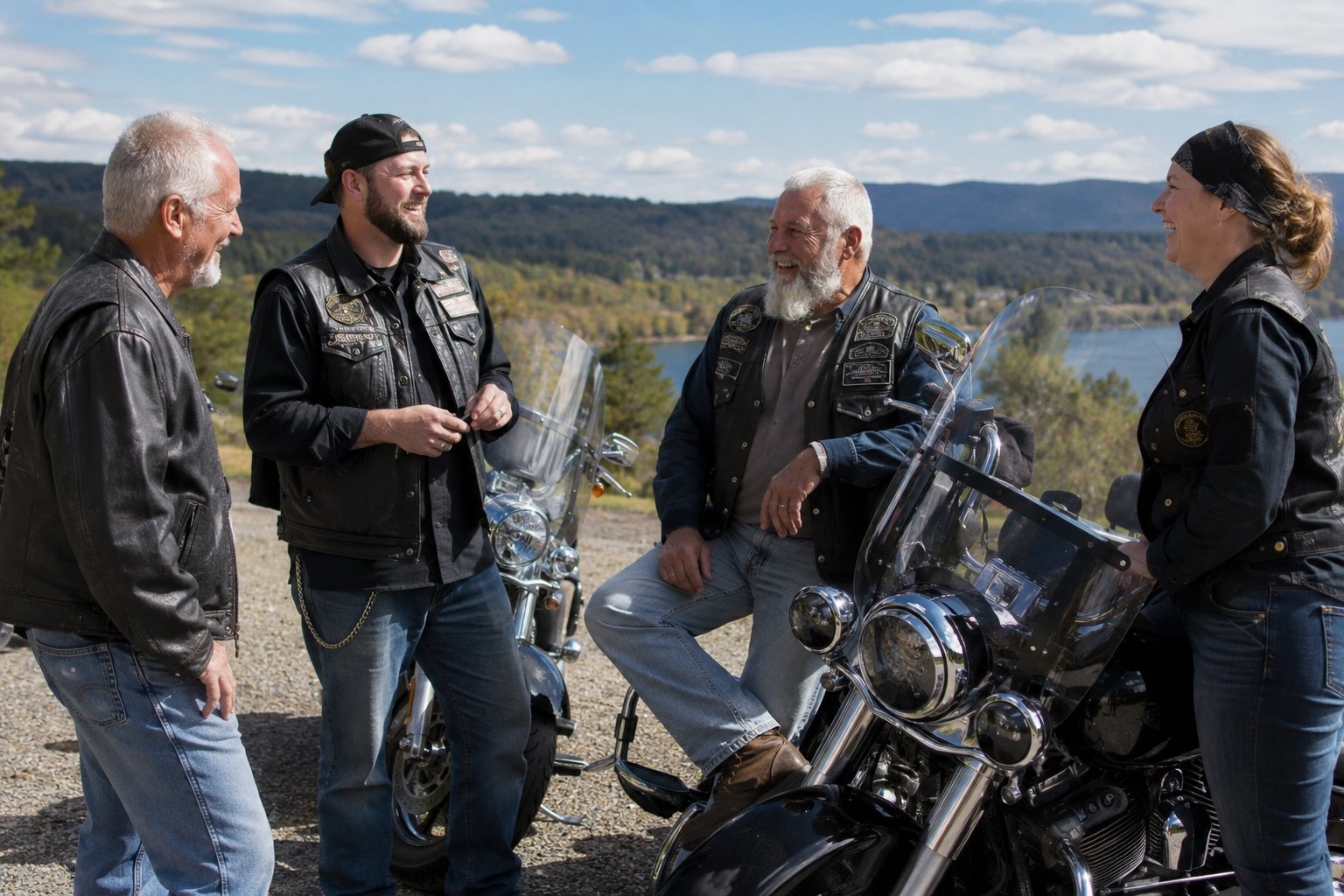
Making Friends Through Motorcycles at Any Age
Ask anyone who rides what motorcycling has given them beyond the obvious — the freedom, the scenery, the excuse to spend a Saturday on a back road — and friendship comes up almost immediately. Not the kind of friendship that fades when a shared workplace does, but the kind that involves WhatsApp threads full of route suggestions, impromptu detours, and standing around a bike for twenty minutes after a ride because nobody wants to head home yet.
What's striking about those friendships is how little age has to do with them. Riding groups routinely include people spanning four decades in age, and the social gap barely registers. The bike does something that most other social contexts can't: it gives everyone in the group an equal reason to be there, a common language, and a shared experience that cuts through the awkwardness of being strangers.
Why the Motorcycle Community Is Unusually Good at Friendship
Most social environments sort people by age almost automatically — school, workplaces, local sports teams. Riding groups don't. When you're navigating the same twisting B-road in convoy, your age bracket is genuinely irrelevant. What matters is your riding style, how you handle a junction, whether you wait at a roundabout for the person behind you. These are the things that earn you social standing in a riding group, and none of them have an age attached.
There's also something about the vulnerability of being on a bike that accelerates trust. You've been in each other's peripheral vision for two hours on open roads. You've watched each other make decisions under pressure and come out the other side. By the time you reach the café, you've already seen more of each other's character than most new acquaintances do in months. The ride itself is a vetting process that happens without anyone realising it's happening.
The result is that motorcycle friendships often feel more solid, more quickly, than friendships formed in more passive social settings. The shared experience has depth from the start.
In Your Twenties: Finding Your First Riding Crew
For younger riders, the motorcycle community can feel slightly intimidating at first — a lot of experienced people with expensive kit, talking confidently about bikes you've never heard of. The reality is more welcoming than the first impression suggests.
The fastest way to build a social network around riding in your twenties is to be genuinely curious rather than trying to appear more experienced than you are. Experienced riders notice both, and they respond far better to the former. Bike nights, group rides organized through apps like EatSleepRIDE or local Facebook groups, and even taking your licence alongside other riders all produce friendships that tend to stick.
If you don't yet have your own bike, starting as a pillion is a perfectly valid entry point. Plenty of lasting riding friendships have begun between a rider looking for company on a long run and a pillion who wanted to see what two wheels felt like. Pillion Link was built partly for exactly this — to connect the people on the back with the people at the handlebars, before any romantic element is relevant.
In Your Thirties and Forties: Fitting the Community Around a Full Life
If you're in your thirties or forties, your riding time is probably squeezed between work, family, and the general noise of a busy life. This is actually one of the reasons the motorcycle community suits this age group so well: riding is inherently a pursuit you dip in and out of. Nobody expects you to ride every weekend. The community is there when you are.
Group rides for this age group tend to be better organized, more punctual, and more relaxed than the faster-paced riding of younger circles. The social element often matters more than the mileage — a half-day run with two stops and a long lunch tends to suit riders in this bracket better than a relentless four-hundred-mile push. Finding a group that matches your pace is more about asking around than searching for a specific demographic, but the preference for quality over quantity is common enough that you won't have trouble finding it.
Online communities — local Facebook groups, regional riding forums, platforms like Pillion Link — are especially useful when your schedule is irregular, because you can plan rides in advance and find people with similar availability rather than relying on an informal group that rides every Saturday regardless.
In Your Fifties, Sixties, and Beyond: Where the Community Really Opens Up
The stereotype of motorcycling as a young person's game is almost the opposite of the demographic reality. A significant proportion of the UK's active riders are over 50, many of them riding more — and better — than they ever did in their twenties. More time, more confidence, more money for the right kit, and fewer people to answer to make this one of the most natural ages to find your riding community.
Riders who come to motorcycling later in life, or who return after a gap of years, are often surprised by how quickly they're welcomed. Experienced riders tend to be generous with knowledge, patient with newer riders at any age, and entirely uninterested in the kind of competitive posturing that can characterise younger riding circles. If anything, the conversation gets more interesting — decades of riding produce better stories.
Intergenerational groups are also more common than people expect. A riding group might include someone in their twenties on a naked bike and someone in their sixties on a tourer, and the friendship between them can be one of the more genuine in the group — the age gap is wide enough to make each interesting to the other, and the shared passion bridges it entirely.
The Pillion Advantage: You Don't Need Your Own Bike to Be Part of It
One of the quieter facts about the motorcycle community is that some of its most engaged members don't ride at all — they ride behind. Pillions bring something different to a riding group: they often notice the landscape more, experience the ride more emotionally, and make the rider feel that what they're doing is worth sharing. Many riders actively seek out good pillion company for exactly this reason.
This matters for friendship because it lowers the barrier to entry considerably. You don't need a licence, a bike, or gear beyond a helmet and basic protection to start making friends through motorcycling. Showing up as a pillion — genuinely enthusiastic, curious, and easy to ride with — is a perfectly strong social position in this community.
Where to Find Riding Friends at Any Age
The channels are broadly the same regardless of age, with some variation in which one tends to work best:
Bike nights are the single most accessible entry point at any age. Local pubs, cafés, and dealerships host regular evenings where riders gather without any membership requirement. Showing up on your bike — or arriving with a rider — is enough. A few visits to the same night and faces become familiar quickly.
Riding apps like EatSleepRIDE, REVER, and Meetup let you find organized group rides in your area with no commitment beyond showing up. The social dynamic varies by group, but most are genuinely welcoming to newcomers at any experience level.
Online communities — local Facebook groups, regional riding subreddits, model-specific forums — remain active and useful for finding people who ride in your area. Participating before asking to ride with people produces better results than a cold "who wants to ride?" post.
Community platforms like Pillion Link are particularly useful if you want connection rather than just route-planning. The community here connects riders and pillions specifically looking for shared rides, conversation, and companionship — with the option to add a dating layer only if you want it, never by default.
Charity rides are an underused route for older riders especially. They're open to everyone, socially easy because the shared cause provides a ready-made conversation topic, and tend to draw a broad age range in a single afternoon.
Frequently Asked Questions
Do I need my own bike to make friends through motorcycling?
No. Pillions are a full part of the motorcycle community, and many riding friendships begin between a rider and a pillion. Attending bike nights, joining community groups, and connecting through platforms like Pillion Link are all equally open to people who ride on the back rather than at the handlebars.
Is the motorcycle community welcoming to older riders just getting started?
Very much so. The motorcycle community skews older than most people expect — a significant proportion of active UK riders are over 50 — and experienced riders tend to be patient with newcomers regardless of age. Starting a licence course or joining a local riding group later in life is far more common than it might feel from the outside.
How quickly do motorcycle friendships tend to develop?
Often faster than friendships formed in other contexts. A few hours navigating the same roads, stopping at the same café, and debriefing the ride together can compress the social timeline that would normally take weeks. Most riders say their closest riding friendships formed within the first handful of rides — the shared experience does a lot of the work early.
What's the best way to find riding friends in my area?
Local Facebook groups and riding apps (EatSleepRIDE, REVER, Meetup) are the fastest digital routes. For face-to-face contact, bike nights at local pubs, cafés, or dealerships are low-commitment and widely available. Pillion Link connects riders and pillions specifically for companionship and shared rides, which is especially useful if you're looking for someone to ride with rather than a formal club.
The Bike Doesn't Care How Old You Are
The motorcycle community is one of the few social environments where age really does function as a curiosity rather than a dividing line. A twenty-five-year-old on a naked bike and a sixty-five-year-old on a tourer often have more to talk about than either of them would find in their own peer groups — because the shared thing, the passion for riding, is specific enough to be a genuine foundation rather than just a conversation opener.
Whatever stage of life you're at, the route in is roughly the same: show up somewhere riders gather, be genuinely interested rather than trying to make an impression, and ride when you can. The friendships tend to follow, and they tend to last. That's something the motorcycle community has quietly been doing for a long time — you just have to find your way into it.
You might also like
How to Meet Riding Friends Without Joining a Club
Skip the formal club and still build a real riding crew — the apps, online communities, bike nights, and casual meetups bikers use to find riding friends on their own terms.
How to Introduce Yourself to a New Riding Community
Joining a new riding community? Here's how to introduce yourself the right way — from your first post to your first ride — without feeling like an outsider.