
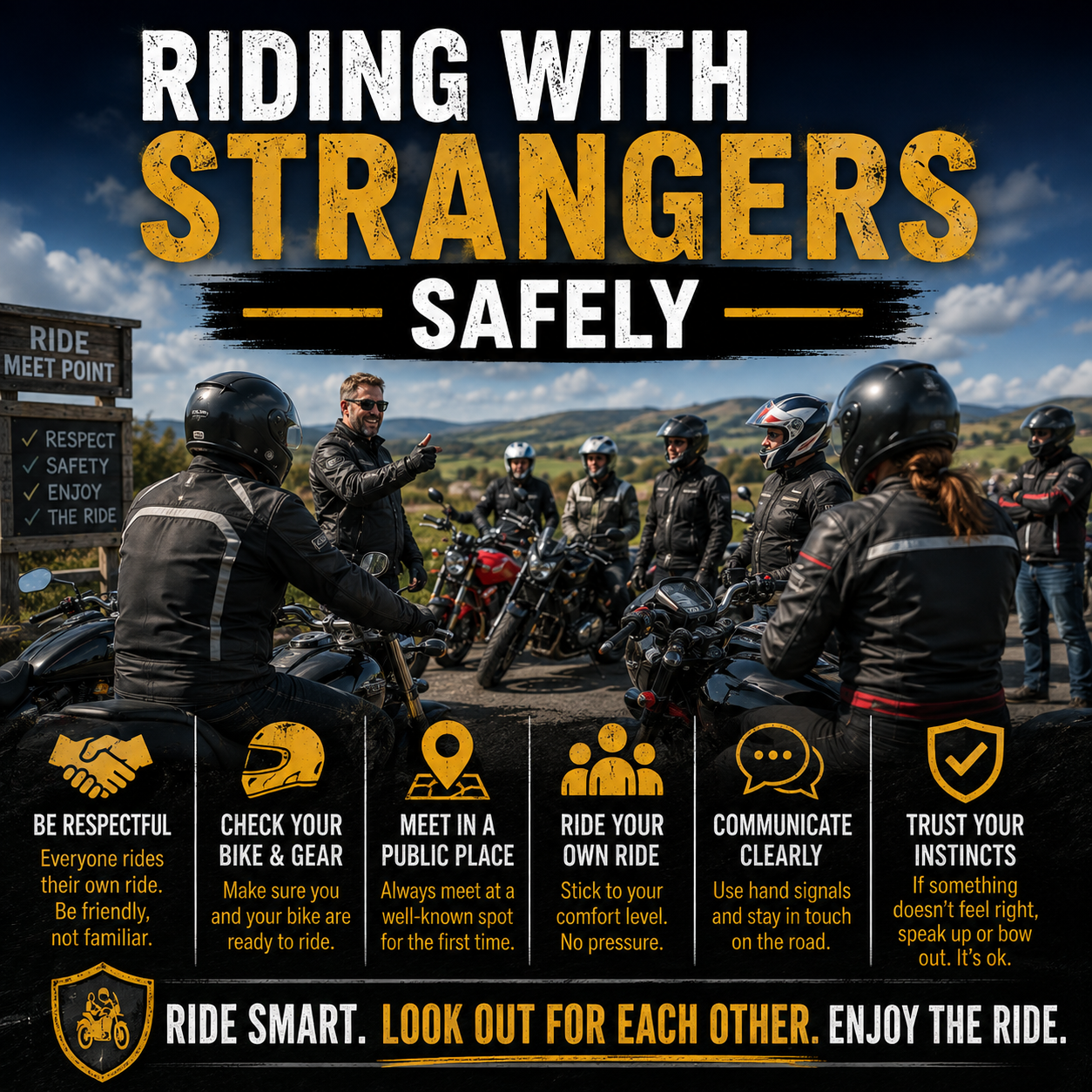
Riding With Strangers Safely: What to Know Before You Go
One of the best things about motorcycle communities — whether that's Pillion Link, a local meetup, or a café gathering — is that you can meet people to ride with who you wouldn't otherwise have known. A stranger on Tuesday can be a regular riding companion by the weekend. But riding with people you've only just met is a different dynamic to riding with your usual group, and a few simple steps make the difference between a great first ride and a stressful one.
Have a Conversation Before You Leave
Five minutes in the car park before you set off is worth more than any amount of hand-waving once you're moving at speed. Find out where you're going, roughly how long it'll take, and what the plan is for stopping. Establish what signals you'll use — stopping, hazard ahead, fuel needed. Ask about pace expectations. None of this needs to be formal; it's a casual conversation, not a briefing. But it means everyone's on the same page before the bikes are started.
Be Clear About Your Pace
Riding beyond your ability to keep up with a group you don't know is one of the most common ways a first group ride goes wrong. Say what you're comfortable with before you leave, not mid-ride when the pressure is already building. Something as simple as "I tend to keep it sensible on roads I don't know" is enough — any good rider will respect that completely. If a group makes it clear that they expect everyone to keep up regardless, that's useful information about whether it's the right group for you.
Agree on Signals
Different groups use slightly different conventions, and assuming everyone knows the same signals is how someone at the back ends up not knowing why the group has stopped, or misses a hazard warning from the front. The basics — left turn, right turn, stop, hazard on the road — are worth a quick verbal confirm even if they seem obvious. If the group uses a specific formation or has a lead-and-sweep arrangement, make sure you understand your role in it.
Share Your Plans
Tell someone who isn't riding where you're going and roughly when you expect to be back. This is good practice for any ride, but particularly sensible when you're heading out with people you haven't ridden with before. A quick text to a friend or family member before you set off takes thirty seconds and means someone knows where you are if anything unexpected happens.
Ride Your Own Ride
The single most important rule for any group ride with strangers: ride at your own pace, not the pace of whoever is in front of you. A rider you've just met has no way of knowing your experience level, your familiarity with the roads, or how your bike handles. You're responsible for assessing all of that yourself. If the group pulls ahead and you lose sight of them at a junction, stop and wait — they'll come back. Pushing to keep up is how accidents happen.
Trust Your Instincts
If something about a group or a situation feels off before you've even set off, it's worth paying attention to that feeling. This is rare — the overwhelming majority of riders you'll meet through motorcycle communities are genuine, welcoming, and safe — but your instincts are a reasonable guide. You're never obligated to ride with a group you've met, and "I've got something on" is a perfectly good reason to give if you need one.
After the Ride
If the ride went well — and it usually will — say so. Riding with new people can feel like a bit of an audition in both directions, and a simple "that was great, I'd be up for doing it again" does a lot to turn a one-off ride into the beginning of a regular thing. Most lasting riding friendships started as a first group outing with people who were, at that point, strangers.
You might also like
Pillion Safety 101: How to Brief a New Passenger Before the Ride
A quick pillion safety checklist covering where to hold, how to lean, and what not to do.
How to Introduce Yourself to a New Riding Community
Joining a new riding community? Here's how to introduce yourself the right way — from your first post to your first ride.