
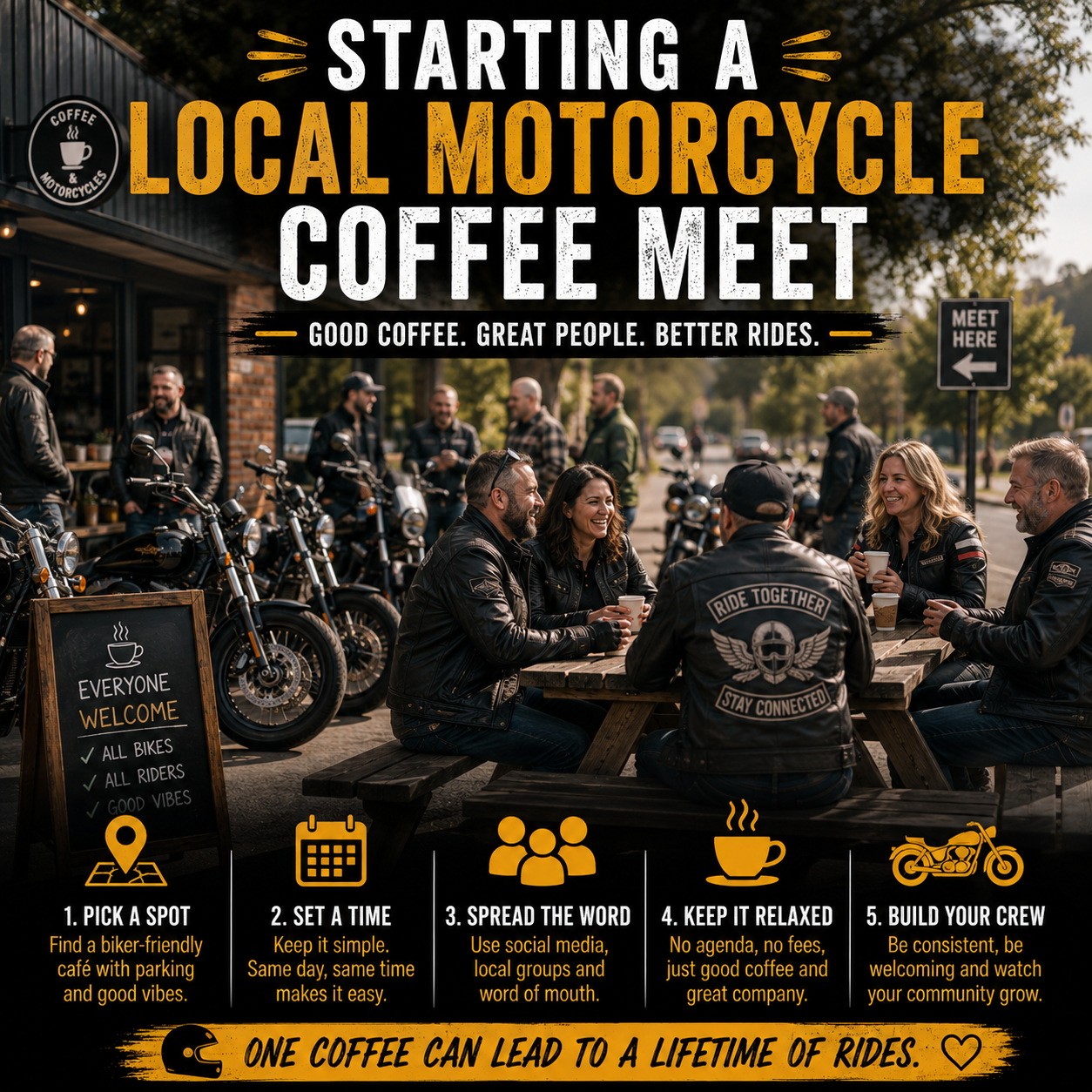
How to Start a Local Motorcycle Coffee Meet
The motorcycle coffee meet is one of riding's most enduring and genuinely low-key traditions: a regular time and place where riders show up, park, drink coffee, and talk bikes. Some grows into something with a hundred regulars. Others stay at six or eight people for years and that's exactly right. Starting one is simpler than most people assume — the main thing required isn't organisation, it's commitment to showing up.
Pick the Right Venue
The venue is the meet. Get this right and everything else follows. You're looking for adequate parking — ideally a car park or forecourt where bikes can be parked and viewed without causing obstruction — an indoor space to retreat to when the weather makes standing outside optimistic, and staff or management who are welcoming rather than merely tolerant. Transport cafés, farm shops with café spaces, garden centres, and independent roadside spots tend to be the best fit. Chain coffee shops are usually too small, too noisy, and without the parking that makes the meet a visual event as well as a social one.
It's worth speaking to someone at the venue before you commit. Explain what you're doing — a regular weekly gathering of motorcyclists, probably growing gradually, always buying food and drink. Most venues will be delighted by the reliable trade. Some will offer to put up a chalkboard or a notice. A venue that's enthusiastic about hosting makes the meet feel established almost immediately.
Fix a Time and Hold It
The most important single decision is the time — and once you've made it, don't change it. Sunday mornings are the most common for UK bike meets, usually from around 9am or 10am. Weekend evenings are popular for summer meets. Some areas have a strong Tuesday or Thursday breakfast crowd. Pick what makes most sense for your area and your likely regulars, and then be there every single week regardless of turnout.
Consistency is what turns a meet into an institution. Riders who show up for the first time and find nobody there don't come back. Riders who show up and find two other bikes and a warm welcome almost always do.
Start Small
Resist the urge to launch with a big event. A well-attended first meet followed by a quiet second one creates a misleading sense of decline. A small, steady start that builds gradually creates the opposite: a sense of momentum and growth that keeps people coming back and brings their friends. The meets that last longest almost always started modestly — two or three regulars, a fixed time, and the quiet confidence that the right people would find their way there eventually.
Spread the Word the Right Way
Local is more effective than broad. Tell the riders you already know, post in area-specific motorcycle groups rather than national ones, and put up a note at any local bike shop whose owner will allow it. A simple, clear message does more than a detailed event post: where, when, every week, no booking, everyone welcome. Notice boards and word of mouth still carry real weight in motorcycling communities — mention it on rides, chat to people at fuel stops, tell anyone you see on a bike.
Pillion Link is a natural fit for reaching riders who are specifically looking for local community — posting on the platform about your meet puts it in front of people who are already looking for exactly this kind of connection.
Keep It Informal
The temptation, as numbers grow, is to add structure — a committee, a membership fee, a formal ride out, a sign-up sheet. Resist this for as long as possible. The appeal of a coffee meet is that it requires nothing of anyone. You show up, you leave when you feel like it, there's no agenda. The moment it starts to feel like an obligation, some of the regulars will quietly stop coming. If the meet eventually grows to a point where some organisation becomes genuinely necessary, introduce it slowly and collaboratively.
The Thing That Makes It Stick
The meets that last years — sometimes decades — have one thing in common beyond venue and timing: a small core of people who are simply always there. Not because they've taken on a role or a responsibility, but because they genuinely like showing up. If you can find two or three people who feel the same way about the meet as you do, you have something that will outlast any single organiser's availability or enthusiasm. The community owns it, not any one person.
You might also like
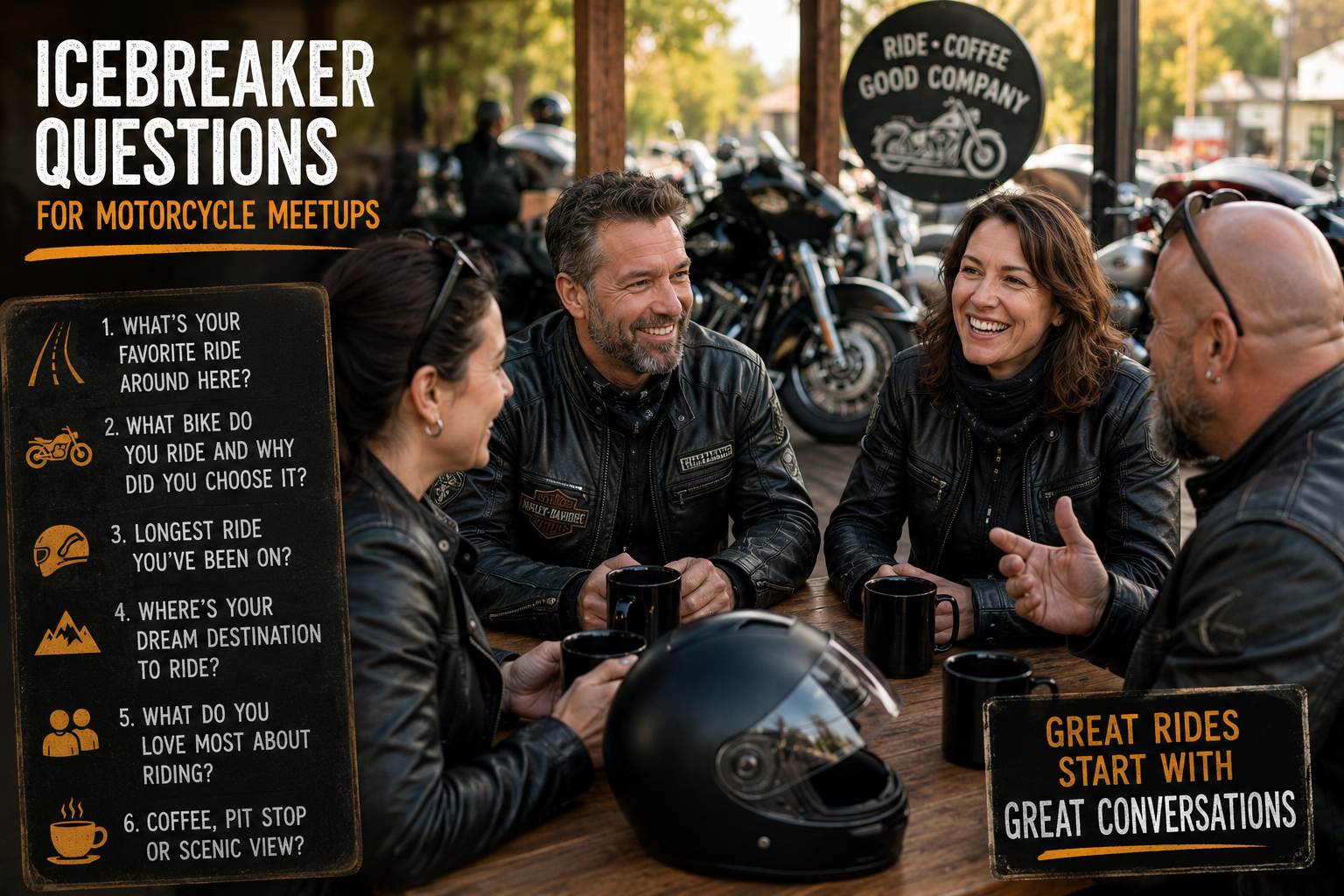
Icebreaker Questions for Motorcycle Meetups
The best conversation starters for getting to know new riders at a meetup — and why the obvious questions often work best.
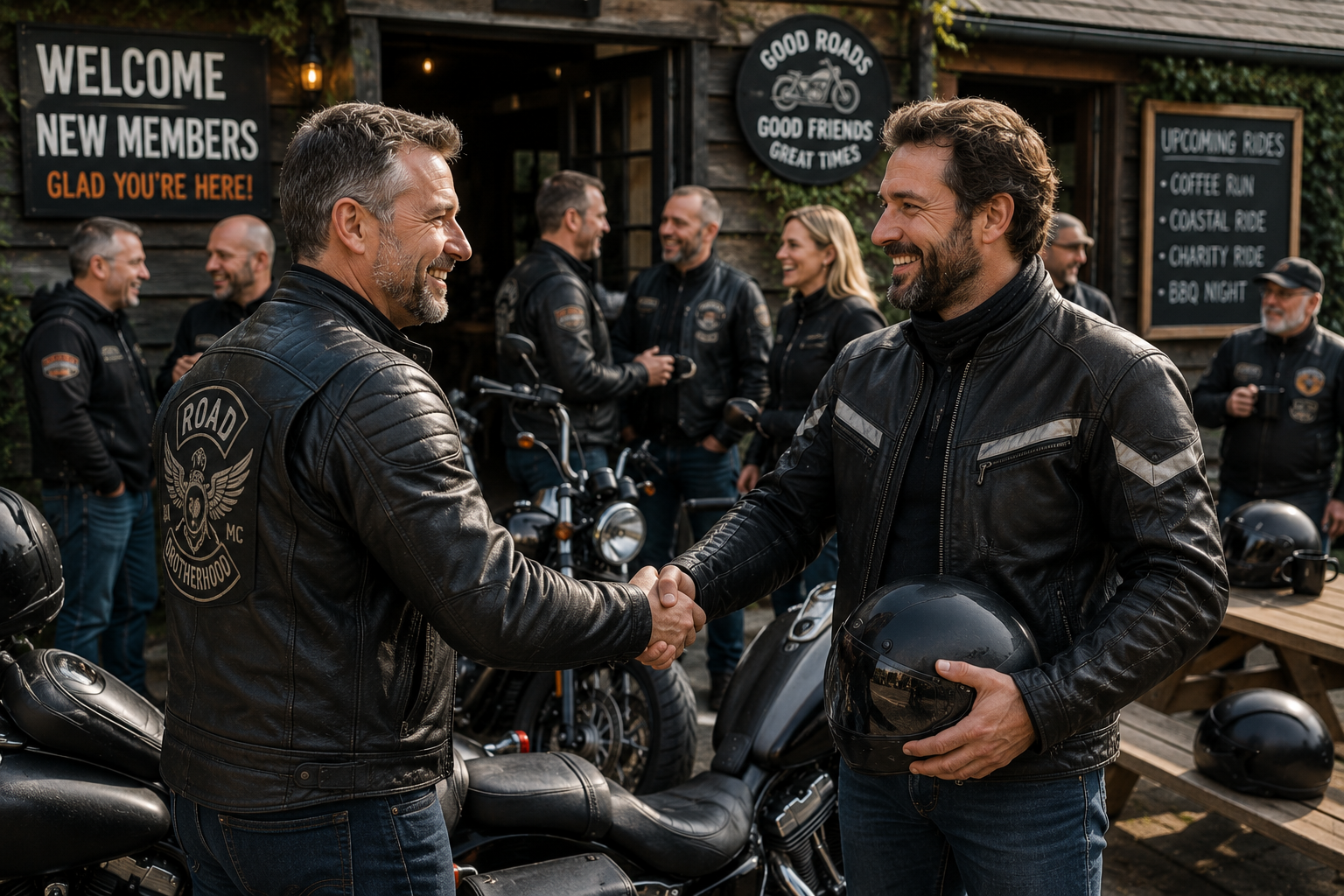
How to Welcome New Members Into a Community
The small gestures that make a new rider feel genuinely included — and the ones to avoid.