Why Small Local Rides Are Often Better Than Huge Events
There's an obvious appeal to a big motorcycle event. The sheer scale of it, the parade of machines you'd never see in one place otherwise, the sense of belonging to something larger than your usual circle. The big rallies and national gatherings have their place in the motorcycling calendar, and they're worth going to.
But ask most experienced riders which rides they remember most fondly, and the answer is rarely a large organised event. More often it's a Tuesday evening run with three friends, or a spontaneous Sunday morning that turned into an all-day adventure, or a route they've done a dozen times with the same small group and somehow it's always good. Here's why small local rides tend to outperform the bigger occasions.
You Actually Talk to People
At a large event, you're surrounded by riders, but genuine conversation is surprisingly elusive. There are too many people, the noise level is often high, and the social dynamic of a crowd means you tend to move in a loose cluster rather than settling into proper exchanges.
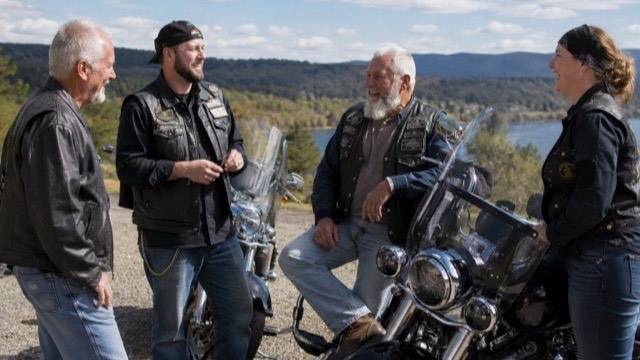
On a small local ride, you have the same three to eight people all day. By the time you've stopped twice, you've had the kind of extended conversations that you simply don't get in a larger setting. You learn people properly — not just what they ride, but who they are. That's the basis of an actual friendship rather than a loose acquaintance.
The Route is Yours to Shape
Large events happen where they happen, and you get there however makes sense. The route is incidental to the destination. Small rides are different — the route is often the point. A group of four can make decisions spontaneously: take this turning instead of that one, stop when something looks worth stopping for, skip the planned café because someone spotted a better option down a lane. The ride breathes.
This flexibility produces the serendipitous moments that stick in the memory — the viewpoint you didn't plan on, the tiny local café that turned out to be exceptional, the conversation with a farmer about a back road that saves twenty minutes and adds thirty in the best possible way.
The Logistics Are Simple
Organising a large group ride is a significant undertaking: route planning, marshalling at junctions, managing vastly different pace preferences, ensuring nobody gets lost. It can be done well, but it requires infrastructure — and no matter how well it's done, the larger the group, the more the logistics dominate the experience.
A small local ride needs one person with a rough plan and a shared sense of direction. The simplicity of it means less energy goes on coordination and more goes on the actual riding. The ratio of enjoyment to effort is far better.
You Learn the Roads Properly
Regular small rides with a consistent group gradually build a shared knowledge of local roads that has real depth. You know which sections are best in the morning when the sun is behind you, which roundabout consistently has gravel on the exit, which stretch of B-road is genuinely world-class on a clear autumn day. That accumulated knowledge is one of the quieter pleasures of riding with the same people over a period of years.
Big events rarely contribute to this kind of knowledge, because the roads are chosen for logistics rather than quality and you're rarely in a position to pay close attention anyway.
The Low-Key Version Often Becomes the Ritual
The rides that become fixtures — the ones that repeat, that people look forward to, that form the backbone of a riding friendship — are almost always small and local. A standing Sunday morning run. A regular Thursday evening loop. A once-a-month meet at the same café. These aren't grand occasions; they're rhythms. And the rhythm is often what people value most when they look back on their riding life.
Big events are worth attending occasionally. But it's the small, repeatable, local rides that tend to become the thing you'd miss most if they stopped.
Getting Started
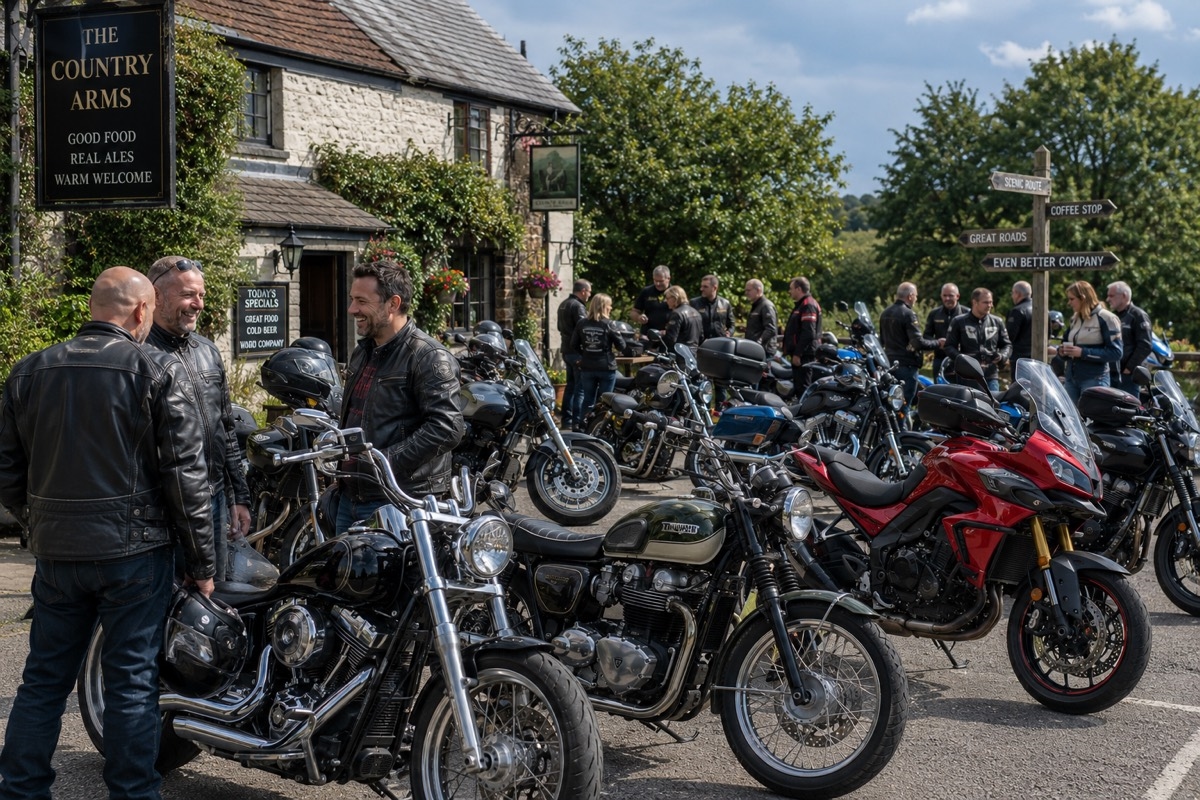
If you haven't found your local riding circle yet, the best place to start is a local meetup — casual, public, and specifically designed for people to show up and see who they get on with. From there, the smaller rides tend to emerge naturally: someone suggests a route, a few people say yes, and something that begins as a one-off becomes a habit. The communities that sustain themselves over years are usually built on exactly that kind of unpretentious foundation.