Boots That Balance Comfort and Protection
Motorcycle boots have a reputation problem. For a lot of riders, they conjure an image of heavy, stiff, uncomfortable footwear that you'd never choose to wear anywhere except in the saddle. That image is out of date. The current market includes boots that are genuinely comfortable to walk in, look like regular footwear, and still offer meaningful ankle and foot protection. Finding the right one is a matter of knowing what to look for.
Why Boots Matter
Feet and ankles are among the most commonly injured body parts in motorcycle accidents — particularly in low-speed falls and slides, which are statistically the most frequent type. The ankle joint is vulnerable to twisting forces that regular trainers or shoes provide no resistance to. A motorcycle boot with ankle armour, a heel cup, and a stiff sole changes that picture significantly.
You don't need to wear boots to ride legally in the UK, but this is one of those areas where the protection is specific, the risk is real, and good options exist at every style preference and price point. It's worth taking seriously.
The Main Boot Categories
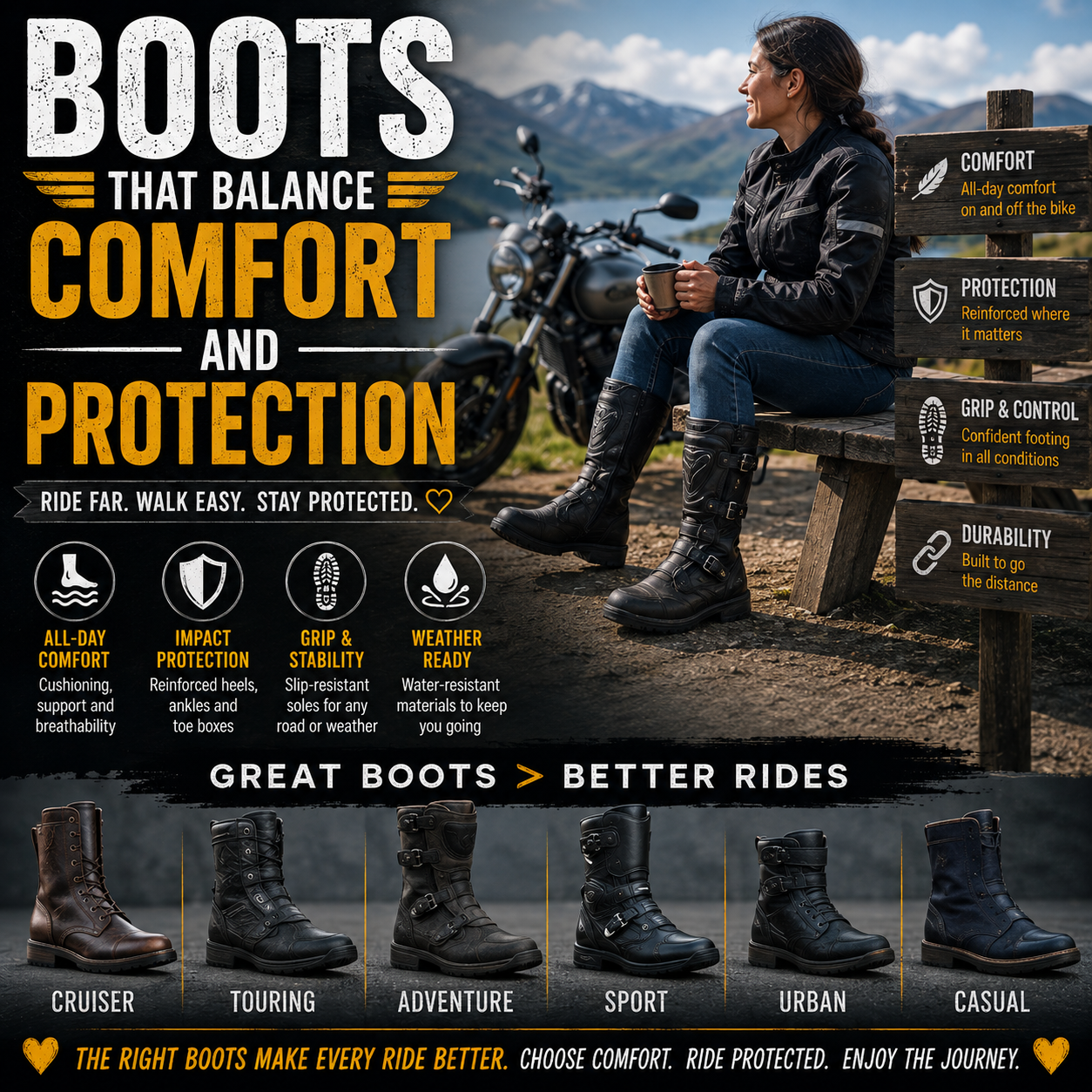
Urban and commuter boots are the closest thing to regular footwear. They're typically leather or textile, mid-ankle height, and designed to look like a smart casual boot or a work boot when you're off the bike. Internal armour is concealed, the sole is walkable, and they're appropriate for most riding conditions short of track days or serious off-road use. If you commute or do a mix of riding and walking, this is where to look first.
Adventure touring boots are slightly taller, typically waterproof, and built for multi-day touring and varied conditions. They sacrifice a little style for capability — more ankle support, better waterproofing, more durable construction — but the best examples are still comfortable to walk in at the end of a long day's riding.
Sport and race boots prioritise impact and abrasion protection above everything else. They're stiffer, harder to walk in, and look distinctly like motorcycle equipment. The right tool for track days; overkill for the daily commute.
Cruiser boots tend toward a classic aesthetic — pull-on leather styles, engineer boots, Western-influenced designs. Protection varies considerably; some include ankle armour and are genuinely protective, others prioritise the look. Worth checking the spec rather than assuming.
What to Look for in the Spec
When comparing boots, the details that actually determine protection are: ankle armour or malleolus cups (protecting the ankle bones on both sides), a heel cup that prevents the foot sliding forward on impact, toe reinforcement, a sole with some stiffness and grip, and shift padding on the top of the left foot. CE certification under EN 13634 is a formal safety rating — boots are rated at Level 1 or Level 2 across four criteria (abrasion, impact cut, transverse rigidity, and ankle height). Level 2 is better.
Waterproofing is worth considering separately from protection. In the UK, waterproof membranes (Gore-Tex or equivalent) are genuinely useful — cold, soaked feet affect concentration and enjoyment on longer rides more than most riders expect before they've experienced it.
Getting the Fit Right
Boot sizing varies more between manufacturers than shoe sizing does, and the fit of a motorcycle boot — particularly around the ankle — matters for both comfort and the effectiveness of the protection. Try boots on in a shop if at all possible. Walk around in them. If they're uncomfortable after five minutes in a shop, they'll be miserable after two hours on the bike. The calf fit matters too on taller boots; some are cut narrower than others, and this isn't always reflected in the size guide.
Break new boots in gradually if they're leather — a few shorter rides before committing to a full day helps the leather mould to your foot and avoids the blisters that come from a stiff new boot on a long ride.
Price and Value
A budget of £100–£200 will get you a genuinely protective, walkable boot from a reputable brand. Below that, protection tends to be minimal and build quality reflects the price. Above £300 you're typically paying for premium materials, better waterproofing, and longevity — worth it if you ride regularly and want something that lasts. As with helmets, the most expensive option isn't automatically the right one; fit and the right category for your riding style matter more than brand name.