Confidence Builders for Nervous Riders
More riders feel nervous than ever admit it. Motorcycling culture tends to reward confidence and glosses over the very common experience of passing your test and then spending the first few months — or first few years — feeling like you're only just in control of the situation. That silence does new riders a disservice. Feeling uncertain on the bike is normal, it has specific causes, and those causes respond well to specific solutions.
Understand Where the Nerves Come From
Nervousness in riding usually comes from one of a few sources: a lack of familiarity with the bike, a lack of practice in certain specific situations (slow speed manoeuvres, motorways, roundabouts, overtaking), or a bad experience — a near-miss or a fall — that has left a residual anxiety. Understanding which applies to you matters, because the solutions are different.
If it's unfamiliarity with the bike — particularly after a change of machine — the answer is time and miles. If it's specific situations, the answer is deliberate practice in lower-stakes versions of those situations. If it's a past incident, the anxiety may need to be addressed directly before riding improvement helps much.
Build on Quiet Roads First
One of the most effective things a nervous rider can do is spend time on roads with very little traffic. Industrial estates at weekends, quiet country lanes mid-week, housing estates in the early morning. Without the pressure of traffic behind you or the need to make rapid decisions, you can concentrate on the fundamentals: body position, smooth throttle and brake inputs, looking ahead, countersteering. The skills that feel automatic on a good day become deliberate and conscious again, which is where genuine improvement happens.
Slow Speed Is Its Own Skill
Most riding anxiety surfaces at low speed — car parks, filtering, U-turns, tight roundabouts. This is not a coincidence. Slow-speed riding relies on balance and fine throttle control in a way that higher-speed riding doesn't, and it's also the situation where dropping the bike is most embarrassing rather than most dangerous. The irony is that slow-speed practice is also the most effective single thing you can do to build confidence, because it's low-risk and the improvement is rapid and visible.
Find a flat, empty car park. Practise figure-of-eights, tight turns, and riding at walking pace. Put a cone or a jacket down and practise riding around it at the tightest radius you can manage. Ten minutes of this once a week is worth far more than ten hours of motorway riding if slow-speed confidence is what you're trying to build.
Ride With People Better Than You
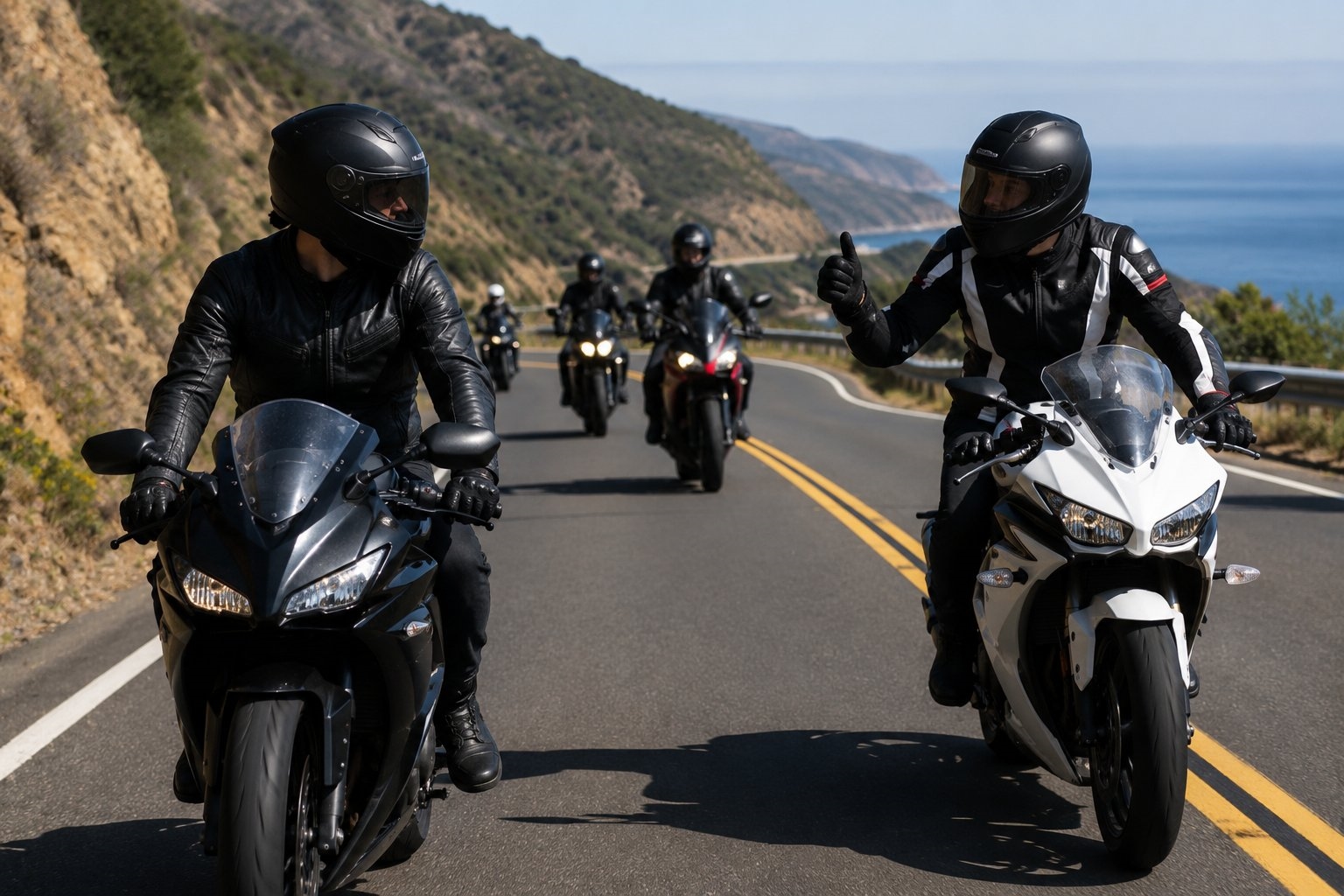
Riding with more experienced riders — not in a competitive way, but observationally — teaches things that no course or article can fully convey. Watch how a confident rider positions themselves in a corner, how they read the road ahead, how early they begin to brake. You don't need to match their pace; you need to observe their approach. Many new riders find that a few rides with an experienced, patient mentor moves their confidence more quickly than months of solo riding.
This is one of the genuine benefits of a riding community — finding people who ride well and are glad to share what they know. Pillion Link connects riders of all experience levels; it's worth being open about where you are and asking to ride with people who can help you improve.
Consider a Post-Test Course
Passing your test demonstrates a minimum standard; it doesn't produce a skilled rider. Most of the riders who describe a step-change improvement in their confidence and enjoyment point to an advanced riding course as the moment things clicked. IAM RoadSmart and RoSPA both run well-structured programmes in the UK that teach systematic road reading, planning, and smooth technique. The improvement in confidence comes not from riding faster but from understanding what you're doing and why — removing the sense of responding to events rather than anticipating them.
Give Yourself Permission to Go at Your Own Pace
Riding culture has a tendency to equate confidence with willingness to push limits — faster, further, bigger bikes. This is not a useful model for building actual skill. Real confidence comes from competence in the situations you regularly encounter, not from having survived more intimidating ones. If a particular road, junction type, or traffic condition consistently makes you tense, that's information: spend time deliberately practicing that situation in a lower-stakes version of it, not forcing yourself through it repeatedly and hoping it gets easier.
Progress comes from working at the edge of your comfort zone, not from being pushed well beyond it. A rider who improves gradually and consistently, at their own pace, tends to end up both more skilled and more confident than one who was pushed hard early and developed anxiety alongside their ability.